A hospital bouquet is not a normal doorstep delivery. A patient may be on another campus, the ward may restrict fresh flowers, and a courier may be stopped at the first gate. The most useful first question is not “Which bouquet is prettiest?” but “Who will receive it, and where?” Once that is settled, choosing flowers becomes much easier.
Confirm the hospital and ward information first
A hospital name alone is usually not enough. Whenever possible, provide the city, hospital name, campus or branch, inpatient building, department, floor, ward or bed number, and a reachable phone number. Large hospitals may have several entrances or buildings, so more detail reduces unnecessary calls.
Ask whether flowers are allowed
Some wards restrict flowers for infection-control, allergy or space reasons. Intensive care, isolation units and certain treatment areas may not accept bouquets at all. If you are unsure, ask the recipient or a family member before placing the order.

Choose a practical bouquet
Hospital rooms can be crowded. A compact bouquet or small basket is often easier to place than an oversized arrangement. Avoid assuming that a dramatic arrangement is always more caring. Ease of handling matters.
Be careful with strong fragrance
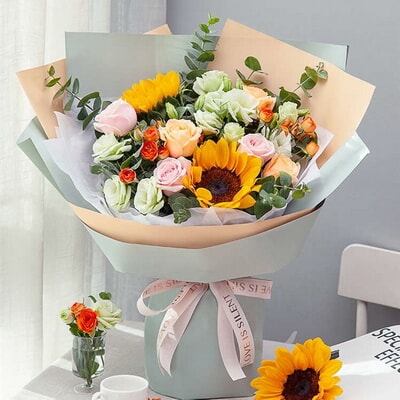
For a patient who is sensitive to smells, strong lilies or heavily scented flowers may be uncomfortable. Roses, carnations, sunflowers and mixed seasonal flowers can be easier choices, but availability varies by city and season.
Match the message to the situation
A short card is usually enough: “Wishing you a smooth recovery,” “Thinking of you and hoping you feel better soon,” or “Take good care and rest well.” Avoid making medical claims or promising a quick recovery.
Plan the handoff
Many hospitals do not allow delivery staff into patient areas. The bouquet may need to be handed to the patient, a family member, a nurse station or a designated entrance. A working local phone number is therefore especially useful.
Ordering from overseas
If you are abroad, use the recipient's local date and time in China. Provide all delivery details in the order rather than relying on an English hospital name alone. If the patient may be discharged soon, confirm the expected stay before scheduling delivery.
What to write in the delivery notes
Try giving the florist a structured instruction rather than an English hospital name by itself: “City and district; hospital name in Chinese; inpatient campus; building and ward; family contact and mobile number; acceptable receiving point.” The bed number helps staff identify the patient, but should not be an excuse to request direct bedside delivery. If no one can take the bouquet at the entrance, a home-delivery date after discharge may be the better plan.
A small gesture may be the kindest one
Someone who is tired, medicated or sharing a room may not want an elaborate display to maintain. A short message and flowers they can carry home are often sufficient. If you want to offer practical help, ask the family whether groceries, a meal or a card would be more welcome. The point is to make the recipient's day easier, not to create an obligation to respond immediately.
Frequently asked questions
Can flowers be delivered directly to the hospital bed?
Sometimes, but not always. Access rules vary by hospital and ward, so the final handoff may happen at an entrance or nurse station.
What if flowers are not allowed?
Consider asking whether a fruit basket, card or another permitted gift would be more suitable.
Should I choose very bright colors?
There is no universal rule. Choose something cheerful and appropriate for the recipient rather than relying on rigid color symbolism.